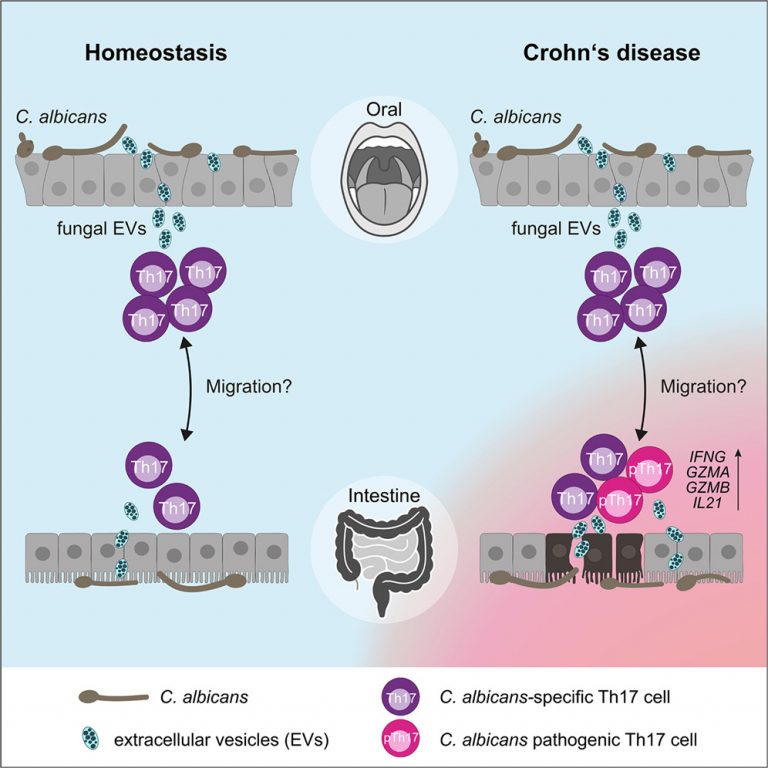
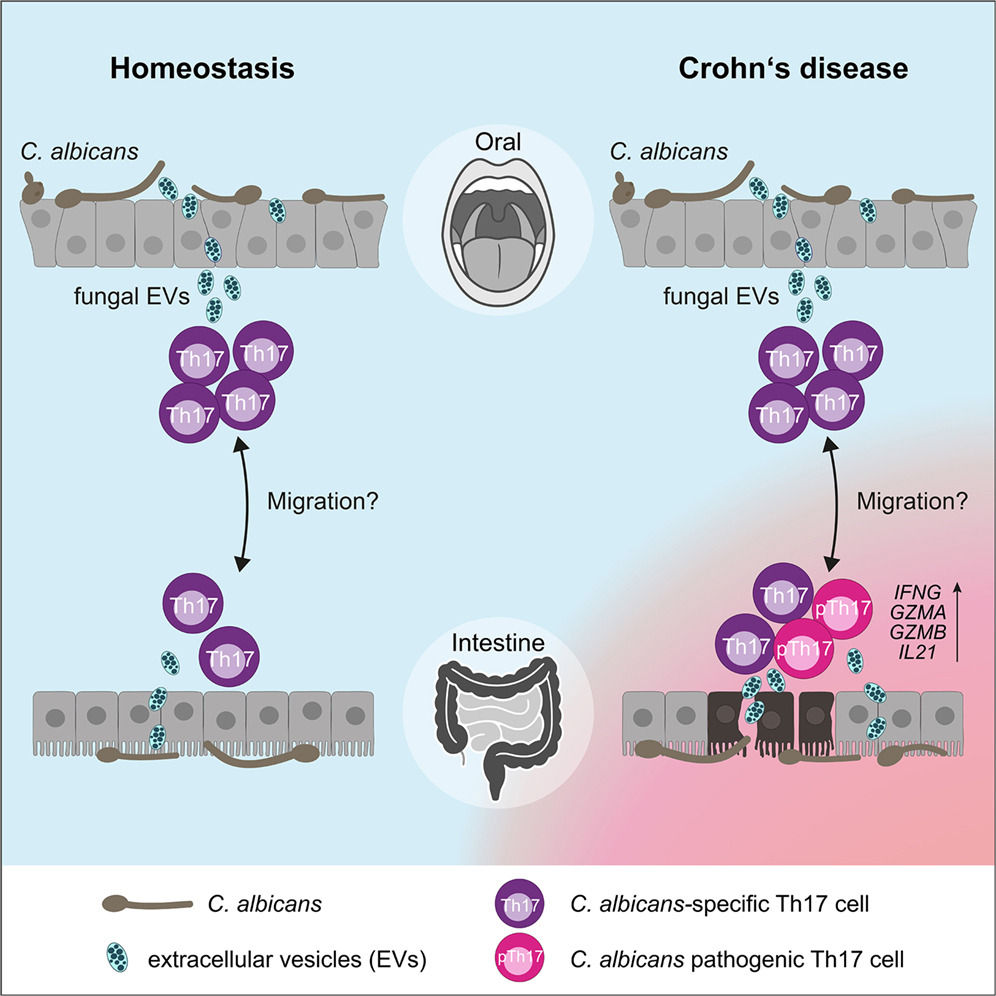
The commensal yeast Candida albicans is a major inducer of human mucosal Th17 cells. How C. albicans drives Th17 cell responses at homeostasis, and whether such responses contribute to inflammatory diseases, remains poorly understood. Here, we showed that C. albicans-reactive Th17 cells targeted a limited set of proteins enriched in fungal extracellular vesicles. At homeostasis, these cells predominantly resided in the oral mucosa. However, T cell receptor profiling revealed shared clonotypes across oral and gut tissues, with C. albicans being a major driver of this repertoire overlap. In patients with Crohn’s disease, C. albicans-specific Th17 cells with features of oral priming were enriched in intestinal tissues, where they retained their focused antigen specificity but acquired pathogenic Th17 cell traits. Together, our results reveal a stable, antigen-restricted C. albicans Th17 subset that is shared across mucosal sites and undergoes functional adaptation in the inflamed intestine. These cells represent a potential target for immune modulation in Crohn’s disease.